 By collaboratewithlinkward@gmail.com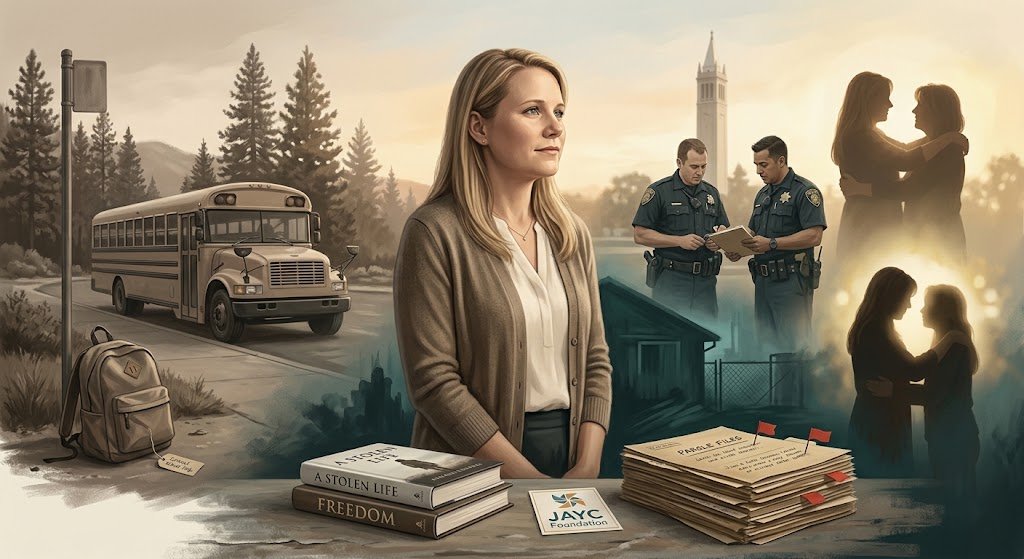
Introduction
If you searched starlet dugard, you probably landed here trying to understand the Jaycee Dugard story — and that’s exactly what this article covers. Starlet is one of Jaycee Dugard’s two daughters, born during the 18 years Jaycee was held captive by Phillip and Nancy Garrido, but she’s never chosen a public life the way her mother has.
So here’s the honest approach: instead of digging into a private adult’s personal accounts, this guide focuses on the parts of the story that are public — Jaycee’s own memoirs, her rescue in 2009, her emotional reunion with her mother Terry Probyn, her stepfather Carl Probyn’s role in keeping her case alive, and the documentaries people are streaming in 2026.
By the end, you’ll know exactly what happened, why it mattered, and where you can watch the real story — told by the person who actually lived it.
Table of Contents
- What Is the Jaycee Dugard Story?
- Why Does Jaycee Dugard’s Story Matter?
- Jaycee Dugard — Key Facts: Rescue, Reunion, and Recovery
- How to Learn Jaycee Dugard’s Real Story (Not Rumors)
- Common Myths About Jaycee Dugard and Her Family
- Expert Tips for Understanding This Case Respectfully
- Frequently Asked Questions
What Is the Jaycee Dugard Story?
Here’s the simple version. In June 1991, 11-year-old Jaycee Lee Dugard was abducted while walking to her school bus stop near Lake Tahoe, California. Her kidnappers, Phillip and Nancy Garrido, held her captive for 18 years, hidden in a backyard compound in Antioch, California.
During that time, Jaycee gave birth to two daughters — one of them is Starlet. In August 2009, two campus police officers at UC Berkeley grew suspicious of Phillip Garrido and his behavior, and their questions eventually unraveled the whole case.
Think of it like a puzzle piece that finally clicked into place after years of dead ends — one routine encounter did what an entire parole system had failed to do. Jaycee was identified, reunited with her mother, and given the chance to rebuild a life that had been stolen from her as a child.
Why Does Jaycee Dugard’s Story Matter?
This case reshaped how people think about missing persons investigations and parole oversight. Here’s why it still gets discussed in 2026:
- It exposed parole system failures. Phillip Garrido was a registered sex offender under active supervision when he kidnapped Jaycee, yet parole officers missed the signs for nearly two decades.
- It led to real policy change. California paid Jaycee a $20 million settlement after an independent review found the state’s parole system failed to catch obvious red flags.
- Her memoirs gave survivors a voice. A Stolen Life (2011) and Freedom (2016) both became New York Times bestsellers, opening up conversations about trauma recovery.
- The JAYC Foundation now helps other survivors. Jaycee turned her experience into ongoing work supporting families affected by trauma and abduction.
- It’s a reminder that recovery is a process. Jaycee has spoken publicly about needing years of therapy, not a single “moment” of healing.
The Jaycee Dugard story isn’t just a headline from 2009 — it’s an ongoing example of resilience that keeps showing up in true crime documentaries and school safety discussions alike.
Jaycee Dugard — Key Facts: Rescue, Reunion, and Recovery
The Rescue
Jaycee was recognized in August 2009 after Phillip Garrido brought two young girls — his daughters with Jaycee — to a UC Berkeley campus event. Officers noticed something was off and eventually connected the dots, leading to Jaycee’s identification after 18 years.
The Mother Reunion
Jaycee’s mother, Terry Probyn, never stopped believing her daughter was alive. Their reunion after Jaycee’s rescue was one of the most emotional moments covered by national media, and Terry has spoken publicly about the pain of those missing years.
Carl Probyn’s Role
Carl Probyn, Jaycee’s stepfather, actually witnessed the abduction from a distance and gave police the crucial early description of the kidnapper’s car. He stayed publicly involved in the search for years afterward.
Summary Table
| Aspect | Detail |
|---|---|
| Abduction date | June 10, 1991 |
| Age at abduction | 11 years old |
| Years in captivity | 18 years |
| Rescue year | 2009 |
| First memoir | A Stolen Life (2011) |
| Second memoir | Freedom (2016) |
| Foundation | The JAYC Foundation |
Jaycee’s story is documented across multiple projects, including the A&E special The Abduction of Jaycee Dugard and various true crime series that revisit the case each year.
How to Learn Jaycee Dugard’s Real Story (Not Rumors)
If you want the accurate version of this case instead of speculation, follow these steps:
- Start with her own books. A Stolen Life and Freedom are written directly by Jaycee, so you’re getting her perspective instead of secondhand retellings.
- Watch verified documentaries. The Abduction of Jaycee Dugard on A&E is a solid entry point, built around real reporting rather than dramatization.
- Check the JAYC Foundation site. This is Jaycee’s own platform, and it’s the most reliable place for updates she’s chosen to share herself.
- Read original news coverage. Outlets like ABC News and the Sacramento Bee covered the case from 1991 onward and are worth revisiting for verified details.
- Skip unverified “where are they now” content. A lot of pages speculating about Jaycee’s daughters, including Starlet, aren’t sourced — treat those claims with real skepticism.
- Support survivor-focused organizations. Learning about trauma recovery in general helps you understand Jaycee’s story with more context and less sensationalism.
Following her own materials keeps you grounded in facts instead of guesswork.
Common Myths About Jaycee Dugard and Her Family
Myth: Jaycee Dugard disappeared from public life after her rescue.
Truth: She’s published two bestselling memoirs and runs an active foundation — she’s chosen a specific, controlled kind of public presence.
Myth: Her daughters, including Starlet, are also public figures.
Truth: They were children born into captivity with no say in their situation, and neither has built a public career the way Jaycee has.
Myth: The parole system caught Phillip Garrido quickly.
Truth: He was under active supervision for years before campus police — not parole officers — finally noticed something wrong.
Myth: Jaycee’s settlement ended the story.
Truth: The $20 million settlement addressed government failure, but Jaycee has said recovery is an ongoing, lifelong process.
Myth: All true crime coverage of this case is accurate.
Truth: Plenty of clickbait pages recycle unverified claims — always check whether a source is Jaycee’s own material or independent journalism.
Expert Tips for Understanding This Case Respectfully
- Read her memoirs before watching dramatizations — the book versions carry far more nuance than any adaptation.
- Separate Jaycee’s story from her children’s privacy — one is public by choice, the other isn’t.
- Support the JAYC Foundation if you want to engage with her work in a meaningful way.
- Fact-check viral claims before sharing them, especially anything about “where they are now.”
- Use this case as a lens on parole reform, not just a true crime curiosity.
Frequently Asked Questions
Who is Jaycee Dugard’s stepdad?
Jaycee’s stepfather is Carl Probyn, who was present the day she was abducted in 1991 and witnessed part of the kidnapping from a distance. He gave police an early description of the getaway vehicle and stayed connected to the case’s public visibility over the following years, supporting the family through the search.
Does Jaycee Dugard have social media?
Jaycee’s public presence mainly runs through The JAYC Foundation, her organization supporting trauma survivors, rather than a personal social account built around her daily life. If you want verified updates from her directly, the foundation’s official channels are the most reliable source, not random fan or tribute pages.
Where can I watch season 1 of The Abduction of Jaycee Dugard?
The Abduction of Jaycee Dugard is available through A&E Crime Central, with a free trial option on platforms like Prime Video. It’s a single-season special hosted by Bill Kurtis that covers the abduction and rescue using real case details rather than dramatized reenactments.
Who was Jaycee Dugard’s mother?
Jaycee’s mother is Terry Probyn, who spent 18 years searching for her daughter and never gave up hope she was alive. Their reunion after Jaycee’s 2009 rescue became one of the most widely covered emotional moments of the entire case, and Terry has spoken publicly about that experience since.
Conclusion
Here’s what actually matters in the Jaycee Dugard story: her rescue exposed real failures in the parole system, her own memoirs give the most accurate account of what she survived, and her mother Terry Probyn’s reunion with her remains one of the case’s defining moments. If you want the real story instead of speculation, start today with Jaycee’s own books or the JAYC Foundation.
What part of this case do you think deserves more attention — the parole reform angle, or the recovery process itself? Let us know in the comments.