 By collaboratewithlinkward@gmail.com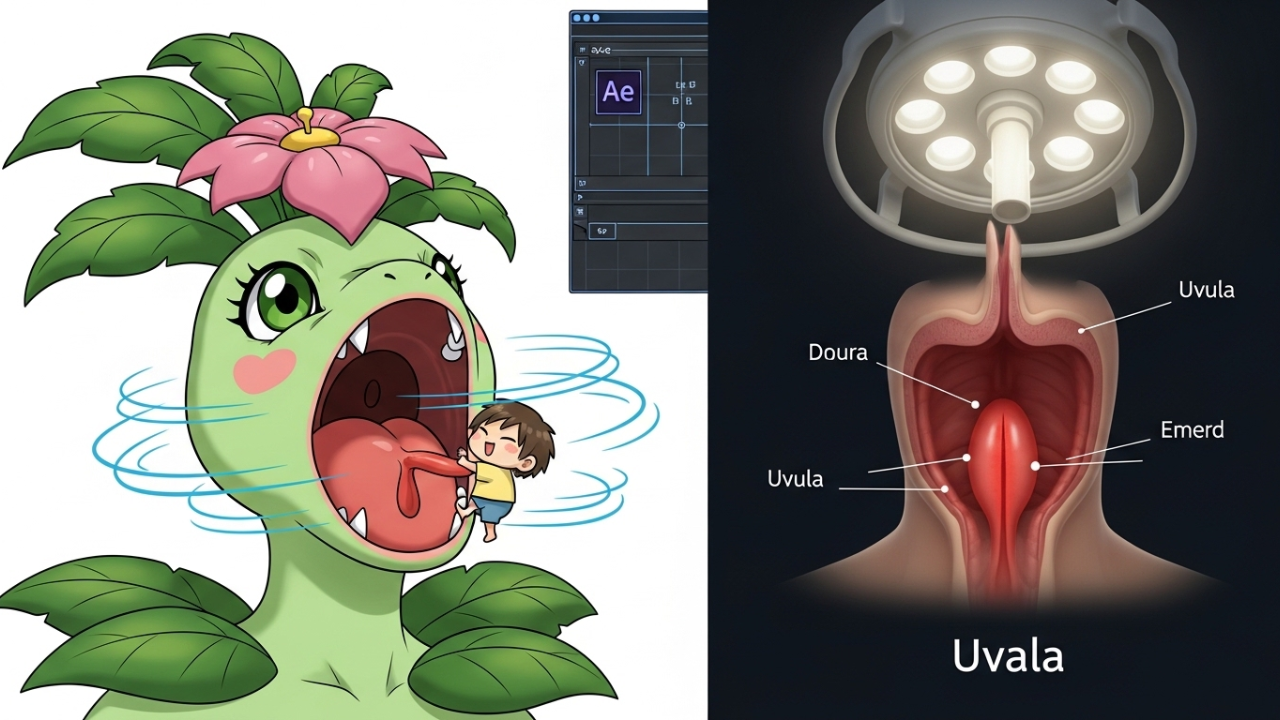
The internet has a unique talent for taking innocent childhood characters and twisting them into absurd, hilarious, and sometimes educational rabbit holes. Few phrases capture this phenomenon better than “palmon uvula.” At first glance, it sounds like a random word generator mishap—what does a plant-based Digimon have to do with the fleshy dangly thing in the back of your throat? As it turns out, quite a lot.
Whether you are a nostalgic Digimon Adventure fan, a motion graphics artist searching for the infamous “whisk FX” tutorial, or simply someone who fell down a weird TikTok rabbit hole, this article is for you. We will explore the origins of Palmon, the real anatomy of the uvula, the bizarre fan animation meme that connects them, and why this odd pairing continues to fascinate the internet.
Who Is Palmon? A Quick Digimon Refresher
Before we can understand the uvula connection, we need to meet the Digimon in the room. Palmon (Japanese name: Palmon) is a Rookie-level “Vegetation” Digimon and the faithful partner of Mimi Tachikawa in the original Digimon Adventure series (1999) and its reboot Digimon Adventure: (2020).
Key Traits of Palmon
-
Appearance: Palmon has light green skin, large blue eyes, a small pink flower on her head, and three purple claws on each hand (which she uses for her signature attack, “Poison Ivy”).
-
Personality: She is sweet, loyal, and slightly sarcastic, often acting as the voice of reason when Mimi gets overly dramatic. However, she has a fierce side when protecting her friends.
-
Evolution Line: Yuramon → Togemon → Palmon → Togemon (Champion) → Lillymon (Ultimate) → Rosemon (Mega). Palmon is one of the few Digimon whose Ultimate form, Lillymon, remains a fan favorite for its fairy-like design.
Palmon’s Voice and Cultural Impact
In the English dub, Palmon was voiced by Dorothy Fahn (credited as Dorothy Elias-Fahn), who gave the character a high-pitched but grounded tone. Japanese audiences know her as Shihomi Mizowaki. Over the years, Palmon has appeared in over 30 video games, trading card sets, and even a stage play. She is often seen as the “cute but capable” member of the DigiDestined team.
So, where does the uvula come in? To answer that, we need to step away from the Digital World and into human anatomy.
The Uvula: That Little Teardrop in Your Throat
Let’s get scientific for a moment. The uvula (formally the palatine uvula) is the small, fleshy, conical projection that hangs from the back of your soft palate. You can see it when you open your mouth wide and say “Ahhh.”
What Does the Uvula Actually Do?
For such a tiny structure, the uvula performs several important jobs:
-
Prevents nasal regurgitation: During swallowing, the uvula and soft palate move backward to seal off the nasal cavity, ensuring food and liquid go down the esophagus instead of up your nose.
-
Produces saliva: The uvula contains serous glands that secrete thin, watery saliva, keeping your throat lubricated and comfortable.
-
Assists in speech: In many languages (French, German, Arabic, and Hebrew), the uvula helps produce guttural sounds like the French “r” or the Arabic “ghayn.”
-
Triggers the gag reflex: When the uvula is stimulated, it can initiate the gag reflex, which protects your airway from choking hazards.
Common Uvula Problems
While the uvula is generally low-maintenance, it can cause issues:
| Condition | Symptoms |
|---|---|
| Swollen uvula (uvulitis) | Redness, pain, feeling of something stuck in throat, difficulty swallowing |
| Elongated uvula | Chronic snoring, sleep apnea, morning sore throat |
| Bifid uvula | A split uvula (often harmless but sometimes linked to submucous cleft palate) |
| Uvular injury | Bruising or laceration from intubation or excessive vomiting |
Interestingly, humans are one of the few mammals with a uvula. Most animals, including dogs and cats, don’t have one. Scientists are still debating its evolutionary purpose, but the leading theory is that it helps with rapid, varied human speech patterns.
The Birth of the “Palmon Uvula” Meme
Now we arrive at the strange crossroads: how did a plant Digimon become associated with a piece of human throat anatomy?
The “palmon uvula” meme originates from two distinct but overlapping internet subcultures: fan animation / visual effects communities and Digimon shitposting forums (like Reddit’s r/digimon and various Twitter circles).
Source 1: The “Hugging the Uvula” FX Meme
Somewhere around 2021, a niche tutorial appeared on platforms like Newgrounds and YouTube, demonstrating a bizarre animation technique. The creator referred to it as “Maikoru Hugging Palmon’s Uvula Whisk FX.” Here’s what that means in plain English:
-
“Maikoru” is a fan-made character sprite (often a chibi-style original creation).
-
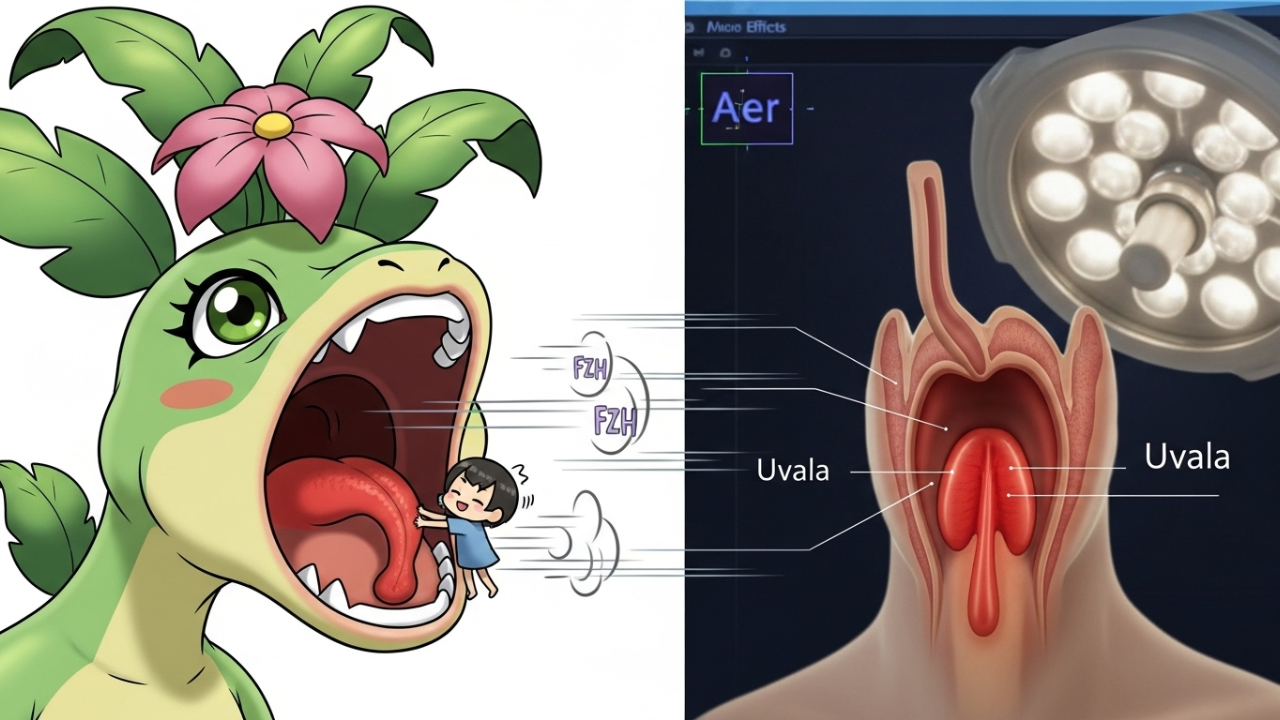
“Hugging Palmon’s Uvula” refers to the visual effect of having a secondary character sprite parented (attached) to Palmon’s uvula via motion tracking.
-
“Whisk FX” is a directional motion blur that mimics the rapid rotation of a kitchen whisk, creating a sense of chaotic, high-speed movement.
In practice, the animator would isolate Palmon’s mouth from a few frames of the original anime, track the uvula’s movement (which moves independently from the jaw), and then attach the “Maikoru” sprite to that tracked data. The final effect looks like a tiny character clinging for dear life to the uvula while Palmon screams, sings, or uses Poison Ivy.
Why would anyone do this? The same reason any internet art exists: because it’s absurd, technically challenging, and hilarious. The “whisk FX” adds a layer of manic energy that perfectly fits the chaotic humor of early 2000s fandom.
Source 2: The Soundboard Clip
The second pillar of the “palmon uvula” phenomenon comes from a viral audio clip. In a fan-made soundboard (or a misremembered quote from the English dub), Palmon allegedly says:
“It’s my uvula, Mimi! It clicks when I’m nervous.”
This line has never been officially confirmed in any canonical Digimon episode. However, the internet ran with it. Fans created short animations, TikTok lip-syncs, and Twitter memes featuring Palmon pointing to her throat as Mimi looks on in confusion. The phrase became a shorthand for “weird, self-deprecating body humor from a beloved children’s character.”
Why Did This Meme Stick?
The staying power of palmon uvula can be explained by a few core principles of internet culture:
-
Mismatched anatomy: Talking about uvulas with a cartoon plant girl feels slightly taboo and silly, which makes it memorable.
-
Technical gatekeeping: The “whisk FX” tutorial is genuinely difficult to master. Those who understand it feel like part of an elite club, encouraging inside jokes.
-
Nostalgia + irreverence: Millennials and Gen Z love taking their childhood media (Digimon, Pokémon, Sailor Moon) and adding a layer of adult absurdity.
How to Animate Your Own Palmon Uvula Effect (Basic Guide)
If you’re a motion designer or animator, you might want to try this for yourself. Here is a simplified workflow:
-
Source clean footage of Palmon speaking or singing. The Digimon Adventure episode “The Birth of Palmon” (Episode 9) has several good close-ups.
-
Isolate the mouth region and track the uvula using After Effects’ point tracker or Mocha AE. The uvula moves on a different axis than the jaw, so manual keyframing is often required.
-
Create or download a “hugging” character sprite (Maikoru or any small mascot).
-
Parent the sprite to the tracked uvula data. Adjust rotation and scale so it appears to “cling.”
-
Apply Whisk FX by adding a directional blur with high intensity, then animating the blur angle in a circular motion over 2-3 frames. Repeat.
-
Render and share on Newgrounds or Twitter with the hashtag #PalmonUvula.
Warning: This effect is famously finicky. Expect to spend several hours on a one-second clip.
Health Lesson: Take Care of Your Real Uvula
While we’re having fun with fictional characters, let’s not forget that your own uvula is a real, working body part. To keep it healthy:
-
Stay hydrated to prevent dry throat and uvular irritation.
-
Avoid shouting for extended periods—it can inflame the uvula.
-
Treat infections early (strep throat, tonsillitis) to prevent uvulitis.
-
Sleep on your side if you snore; an elongated uvula often worsens back-sleeping.
If you ever experience a swollen uvula that makes it hard to breathe or swallow, seek medical attention immediately.
The Bigger Picture: Why We Love Weird Memes
The palmon uvula is more than just a bizarre keyword. It’s a testament to how fans keep old franchises alive through creativity and humor. Palmon debuted in 1999, yet here we are, talking about her uvula in 2026. That longevity doesn’t come from official marketing—it comes from people sharing stupid jokes, teaching each other obscure animation tricks, and finding joy in the absurd.
So whether you arrived here as a Digimon superfan, an aspiring FX artist, or someone who just really wanted to know what a “palmon uvula” actually is, you are now part of that weird, wonderful lineage.
Conclusion & Call to Action
We’ve covered a lot of ground: from Palmon’s evolution line to the anatomy of the human uvula, from a bizarre “whisk FX” animation tutorial to the health tips you didn’t know you needed. The next time you see a random phrase trending, remember—there’s almost always a dedicated community behind it, laughing and creating.
Now it’s your turn: Have you ever attempted the “hugging the uvula” animation effect? Do you remember Palmon’s alleged quote about her clicking uvula? Share your craziest Digimon meme knowledge in the comments below. And if you found this article helpful (or hilariously weird), please share it with a friend who needs a good laugh today.
Subscribe to our newsletter for more deep dives into internet culture, animation tips, and nostalgic deep cuts. Until next time—keep your uvula healthy and your Digimon ready.